
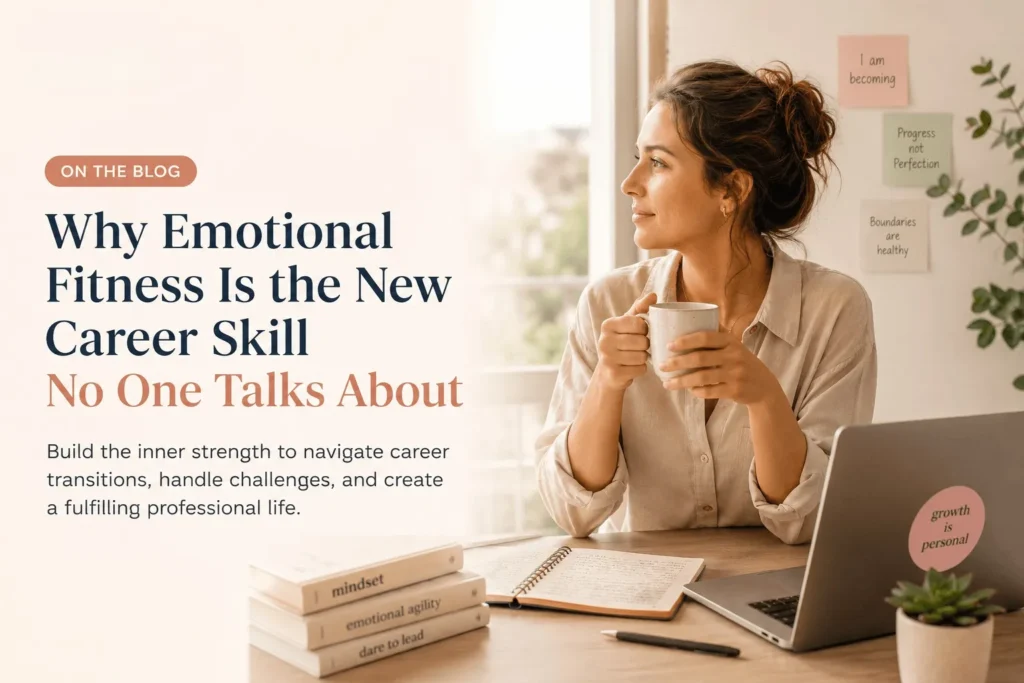
Why Emotional Fitness Is the New Career Skill No One Talks About
We invest years building technical skills, polishing our resumes, and climbing the corporate ladder — yet when a layoff hits, a toxic workplace drains us, or a career pivot feels terrifying, no amount of Excel proficiency helps. What saves us in those moments is something far more fundamental: emotional fitness.
Emotional fitness is not a buzzword or a luxury. It is the daily practice of understanding, processing, and responding to your inner world so that your outer world does not run you over.
What Emotional Fitness Actually Means
Think of it like physical fitness. You do not go to the gym once and declare yourself strong. Emotional fitness is built through consistent, intentional habits — noticing your triggers before they hijack your decisions, sitting with discomfort instead of avoiding it, and communicating your needs without self-erasure.
In a career context, this looks like:
- Recognizing when fear is masquerading as “I am not ready yet”
- Separating your identity from your job title, especially during transitions
- Setting boundaries without guilt when work bleeds into personal time
- Bouncing back from rejection without letting it rewrite your self-worth
The Career Transition Test
Career transitions are one of the greatest emotional endurance tests a person can face. The résumé gets updated, but the internal narrative often doesn’t. Many people carry the weight of an old story — “I failed,” “I was replaceable,” “I don’t know who I am outside of that role” — into every new opportunity they pursue.
Emotional fitness gives you the tools to rewrite that narrative. Not with toxic positivity, but with honest self-reflection and the courage to begin again, grounded in who you actually are.
Building Your Emotional Fitness Practice
You don’t need a dramatic life overhaul to start. Small, consistent actions compound over time:
- Name what you feel— Labeling emotions reduces their intensity and gives you agency over your response
- Create a reflection ritual— Even five minutes of journaling daily builds self-awareness over weeks
- Audit your inner circle— The people around you either drain or replenish your emotional reserves; be intentional
- Seek support without shame— Coaching, therapy, and community aren’t signs of weakness; they’re signs of wisdom
- Celebrate micro-progress— Emotional growth is rarely visible on a LinkedIn profile, but it’s the foundation of every real achievement
You Are Not Your Job Title
In a world that constantly asks “What do you do?”, Positive Circles believes the more powerful question is “Who are you becoming?” Your career is a vehicle, not a destination. And the quality of your journey depends almost entirely on the emotional resilience you develop along the way.
Emotional fitness won’t prevent hard seasons — but it will ensure they don’t define you.